
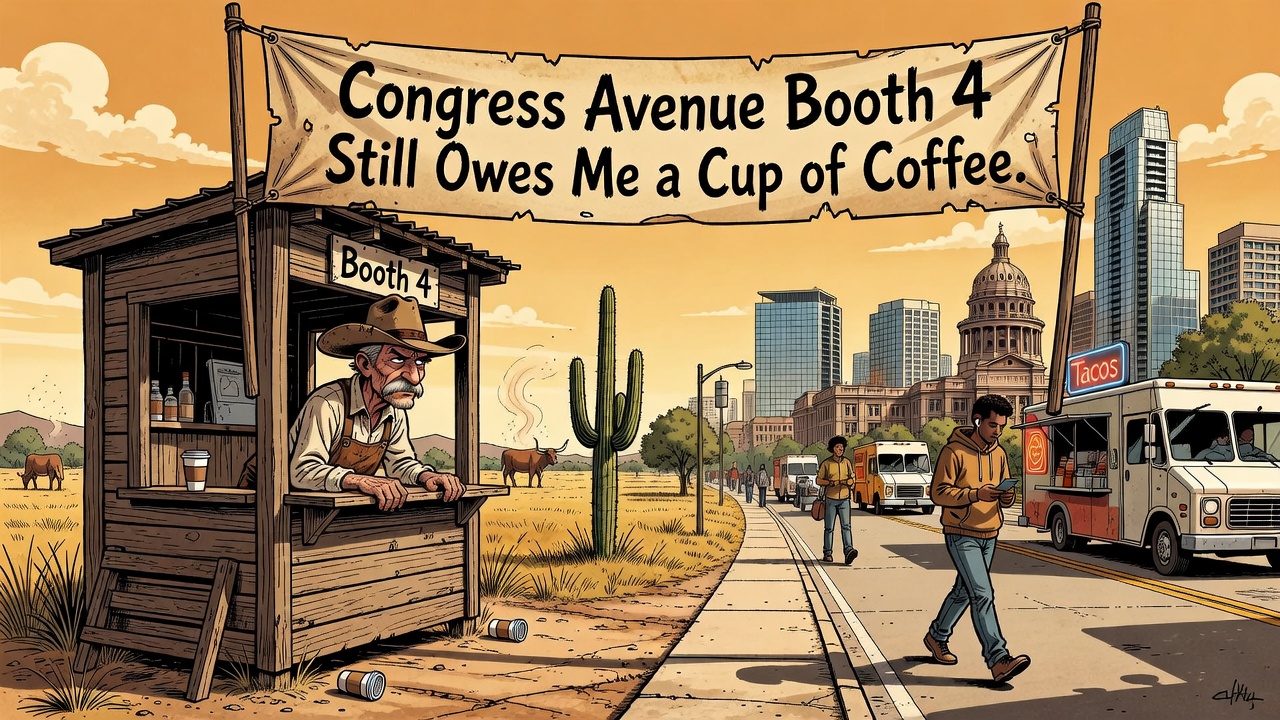
Congress Avenue Booth 4 Still Owes Me a Cup of Coffee
Back when Las Manitas on Congress served $6.75 migas with political gossip on the side, Booth 4 was where deals got done over chorizo; today the hotel restaurant charges $21 for a 'heritage breakfast bowl' to guests who debate oat milk instead of legislation.
The plate landed with a clack that somehow synced with the cash register bell. Two eggs scrambled hard with fresh tortilla strips, enough chorizo to wake the dead, pico that still had crunch, and a puddle of refrieds that had clearly been tended with love and lard. Maria didn't ask if I wanted onions on the side. She already knew. She also knew the guy two tables over had been up since five arguing about Senate Bill 47 and needed more coffee before he started quoting the Texas Constitution.
That was Las Manitas, 211 Congress, back when the capitol dome still felt close enough to touch and the morning rush included actual humans who lived here instead of consultants who rented here. The air carried equal parts cumin, Old Spice, and the particular desperation of people trying to pass legislation before the session ended. You could sit there with yesterday's Statesman, a pen, and $8 and walk out feeling like you'd participated in democracy whether you wanted to or not.
The booths had seen everything. Literally everything. Ann Richards once held court in the one by the window. Willie had been spotted in the corner during some long-forgotten tour break. Local bands, bike messengers, lobbyists in too-tight suits, UT freshmen nursing hangovers, and the occasional federal judge all occupied the same twelve hundred square feet without anyone needing assigned seating or a QR code to prove they belonged.
I watched a city council member split a breakfast taco with a community organizer one morning in 2004 while they hammered out details on a parks bond. No press. No staff. Just two plates of migas and the understanding that the salsa was non-negotiable. The organizer paid. The council member left the tip. Austin still worked that way in small doses.
The kitchen didn't have an Instagram. The waitstaff didn't have corporate smiles. They had opinions, sharp ones, delivered alongside your check. "You gonna eat those beans or just push them around like last time?" Maria would say, already refilling my cup without asking. The coffee tasted like it had been brewed by someone who understood that sleep was optional during legislative session. It got the job done.
Parking was its own sport. You'd circle the block twice, eventually wedge your truck between a legislative aide's Honda and a food delivery van, then sprint across Congress hoping the meter maid was occupied with bigger fish. Nobody had an app telling them dynamic rates. You fed the meter quarters you found under the seat and hoped for the best. The risk felt honest.
Inside, the walls wore decades of Austin without apology. Faded posters for old benefits. A signed photo from some long-gone mayor. The smell of the grill so baked into the paneling that even on closed days you could catch it from the sidewalk. Nothing had been curated. Nothing had been focus-grouped. The place simply existed, like a stubborn relative who refuses to update the kitchen.
Then the building got sold. Of course it did. Congress Avenue had started its long transformation into a corridor of experiences instead of a street where things happened. The wrecking balls came for the old bones. What replaced them was inevitable: a sleek hotel with a "lifestyle lobby" on the ground floor. They kept the address but erased the soul with the precision of someone removing a tattoo.
These days you walk into what they call The Grove Provisions or some such nonsense. The lighting is warm in that expensive way that costs $400 per fixture. The menu describes the migas as "a thoughtfully reinterpreted South Texas staple featuring heritage corn tortillas and pasture-raised eggs." Twenty-one dollars. The server, pleasant and clearly transported from somewhere with better wages, asks if you've dined with them before. They want to walk you through the concept.
The concept is that breakfast used to be for people who lived here. Now it's for people optimizing their morning routine between conference calls.
I went once. Had to see it. Ordered the "heritage bowl" because apparently that's what we call migas when we've given up. It arrived deconstructed. The tortilla strips in their own small dish. The eggs perfectly poached instead of scrambled hard like God intended. A tiny pile of chorizo that looked embarrassed to be there. The server offered a flight of salsas with tasting notes. I asked for Maria. They thought I was joking.
The politicians are gone. So are the organizers, the musicians, the bike messengers who used to park their ten-speeds out front like it was no big deal. What remains are tourists in expensive sneakers and tech workers comparing notes on which co-working space has the better pour-over. They speak in the hushed tones of people who don't want to disturb the ambiance they paid extra for.
The new place has a loyalty program. Scan the code, earn points, unlock a free cold brew after ten visits. Las Manitas earned your loyalty by remembering how you took your coffee and whether you could handle the hot sauce. No points required.
The only thing they kept was the smell of tortillas, and even that's on life support.
You can still find traces if you know where to look. The building's footprint is roughly the same. Some of the old-timers work at the hotel now, wearing the branded polos and pretending the new prices don't offend them. One former cook told me they tried to keep the real recipe but corporate adjusted it for "broader appeal." Broader appeal apparently means less chorizo and more Instagram filters.
I keep a copy of an old receipt in my desk drawer. Dated March 12, 2005. Total: $7.85. That covered migas, coffee, tax, and a tip big enough to matter. On the back I'd scribbled notes from an overheard conversation between two Capitol staffers about a bill that eventually died in committee. The details don't matter anymore. What matters is that it happened in public, over cheap food, without an audience or a sponsorship deal.
Austin still has breakfast. Of course it does. You can spend $27 on something called "activated avocado" in six different neighborhoods. The new spots have excellent lighting and even better WiFi. The staff will call you by name after your third visit because the POS system remembers your order. None of them will tell you that you look like hell and need to drink some water.
Progress, they call it. The Chamber of Commerce puts out press releases about "culinary evolution" and "authentic reimaginings." They never mention what got traded away: the casual democracy of strangers breaking tortillas together, the way a greasy spoon could function as neutral ground, the simple pleasure of knowing exactly what you were getting for your eight bucks.
Sometimes I drive past the address at 7 a.m. just to torture myself. The hotel guests shuffle in wearing robes that cost more than my first apartment's rent. They stare at their phones while waiting for their heritage bowls. The capitol dome is still visible if you crane your neck just right, but it feels farther away than ever.
Maria would have already poured their coffee by now. She would have asked how their mother was doing. She would have given them extra tortillas without being asked, because that's what neighbors did.
The new place has a QR code for that.
What really stings isn't just the price jump from eight bucks to twenty-one. It's the replacement of messy, real interaction with sanitized transaction. The old joint ran on nods, refills without asking, and the ambient noise of people solving actual city problems between bites of eggs. You'd hear a transit advocate arguing with a developer two booths down, or catch a band booker cutting a deal on a napkin. The new version runs on algorithms that suggest add-ons based on your past orders and a playlist of lo-fi beats designed to keep you calm but not engaged.
Last month I stood outside the hotel entrance watching a valet in a vest that cost more than my old truck's tires hand over keys to a visitor from California. The guy asked where to get "real Austin breakfast." The valet pointed upstairs. I almost interrupted to tell him the real spot got demolished for this very lobby, but what good would it do? He'd probably just open an app and rate the experience five stars anyway.
The corner of Congress and 2nd used to pulse with that particular Austin friction, the kind where a punk rocker could share counter space with a legislative intern and both would leave changed. Now the friction is gone, replaced by glass walls and a carefully selected soundtrack that never offends. The only remnant of the old sign is a tiny plaque in the elevator bank that says "Formerly home to a beloved local eatery." Beloved. Past tense. As if the memory itself needs corporate framing.
I still make migas at home some mornings, but it's not the same without the clatter of plates from the kitchen or the guy at the next table cussing out a bill that just got tabled. The salsa from the jar isn't Maria's, and my coffee doesn't come with unsolicited wisdom about which commissioner is on the take. Those details sound small until they're erased. Then the absence feels like a missing tooth you keep tonguing.
The tech influx didn't invent breakfast. It just monetized it beyond recognition and stripped the tables of anyone who couldn't expense it. What was once a working breakfast for working Austin became content for visitors documenting their "authentic" stay. The QR code on the new tables doesn't link to the old menu or the health department violations from 1998 that everyone ignored because the food was that good. It links to a survey asking how "immersive" your heritage experience felt.
Booth 4, if it even exists in the remodel, probably seats influencers now. They take photos of their bowls from above, caption them with something about mindful eating, and never once overhear a real conversation about whether the city needs another bike lane or a functioning sewer system. The only nod to history is the overpriced coffee, which somehow still can't match what Maria brewed on that ancient Bunn machine that hissed like a grumpy dragon.
I miss the unpredictability most. One day it'd be quiet enough to read the paper cover to cover. The next, the place would fill with staffers from every corner of the capitol, ties loosened, voices rising over plates of huevos. Arguments would break out, compromises would get sketched on the backs of order tickets, and Maria would roll her eyes at all of us while keeping the coffee coming. That kind of place doesn't get replaced. It gets erased so thoroughly that new arrivals never know it existed.
The building's new owners brag about preserving the "spirit of Austin" in their marketing materials. They should have asked any of us who sat in those booths what that spirit actually tasted like. It tasted like chorizo and black coffee and the faint metallic tang of a city still figuring itself out. Not whatever oat milk and tasting notes they're peddling upstairs.
Next time you're downtown at sunrise, skip the hotel lobby. Drive around the block a few times like we used to. Feel the meter anxiety. Then go somewhere else that hasn't been hotel-ified yet, if you can find it. Order the migas. Eat them slow. Overhear what you can. Tip like you remember what it was like when eight dollars bought more than just calories. It bought you a seat at the table where Austin was still being argued into existence, one clacking plate at a time.